Pre-K, Kindergarten, First, Second, Third, Fourth, Fifth, Sixth, Seventh, Eighth, Ninth, Tenth, Eleventh, Twelfth, Higher Education, Adult Education, Homeschooler, Staff - TeachersPayTeachers.com

A Letter From Your Teacher on the First Day of School AND A Letter From Your Teacher on the Last Day of School Book Companions!

Do you need a quick printable with comprehension questions, games, vocabulary, grammar, fluency, phonics, comprehension strategies, sequencing, writing, and a comprehension test for the book, A Letter From Your Teacher on the Last Day of School? This book companion will save you time and is great for guided reading or whole group! A Letter From Your Teacher on the Last Day of School was written by Shannon Olsen and must be purchased separately.

AND,,,

Are you looking for comprehension questions to go with the book, "A Letter from Your Teacher on the First Day of School?" This book companion has comprehension and so much more to help you teach the the comprehension strategies, vocabulary, grammar, and more! These activities will help you guide your students to understand and comprehend this text.

                                                          Click HERE to purchase.


No more wasted time or panic to have something ready, just print and go! Click HERE or on one of the following pictures to learn more or buy now!

Have you ever needed a math station activity and don't have the time to create it? This resource can help! Just print and go!


Do you Assess your Kindergarten or First Graders at the Beginning of the School Year?

How do you level your students so that you can work with them in small groups in reading? Here are a few things I look at to level my students!

  1. Assess alphabet recognition and sounds. You may already have access to this from their kindergarten year. However, lots of things can change over the summer. I just give them an alphabet chart and point to random letters so they are not going in order asking the letters and then later with sounds. This will give you a great start for who needs help with letters. You may also do this with numbers to set up your math groups.
  2. Sit down and listen to your students read. If you have leveled readers either guided reading or Lexile readers. Start out with a guess to listen to them read. If you aren't sure, start with level A. We use GR levels, so I can speak to that. I am not as familiar with Lexile system. If you student is reading at level A with great fluency, you may want to skip up to a level C, and so forth. If they are struggling at level A, then they are below level A. Begin to work more on continuing letter recognition and sounds, then putting these together in Consonant Vowel Consonants, CVC format. C-A-T, for example. I'll save more information on that for later.
  3. Just watch them during their beginning of the year activities. Can they write their name? Are they already reading? It's ok if you haven't gotten to all your students. Even if you notice a few of your students skills, that gives you a good starting point for when you work with them 1-1. Grab a clip-board, write down what you notice on sticky notes when they are doing the fun, easy activities on those first few days of school. Transfer these to a student levels notebook.

Once you get an idea of levels, whether you write below level, on level, above level, guided reading level <A through G, for example. You will start to notice a pattern of students that fit together. Also, consider personalities and behaviors. Working in small groups has let me work with students right where they are.

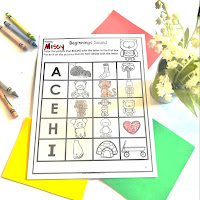
If you need forms for the alphabet, I do have some available. But you can do this with any alphabet chart. Start backwards so they are not rote citing the alphabet, first with letters, then sounds. Do the same with numbers. Start with 20 and go backwards, or simple hop around, checking off all they know. Here is a FREEBIE if you are interested.

caption for image

How do you level your students?

Thanks for being amazing today!

You may be interested in the following products to help you on your journey!


How do I Prepare my Child for Kindergarten?

 It's almost time for back to school. Many students are starting their very first year of school, and that will be kindergarten! Have you asked questions like, how do I prepare my child for Kindergarten? What should my child know before entering kindergarten or what is needed for kindergarten readiness?  

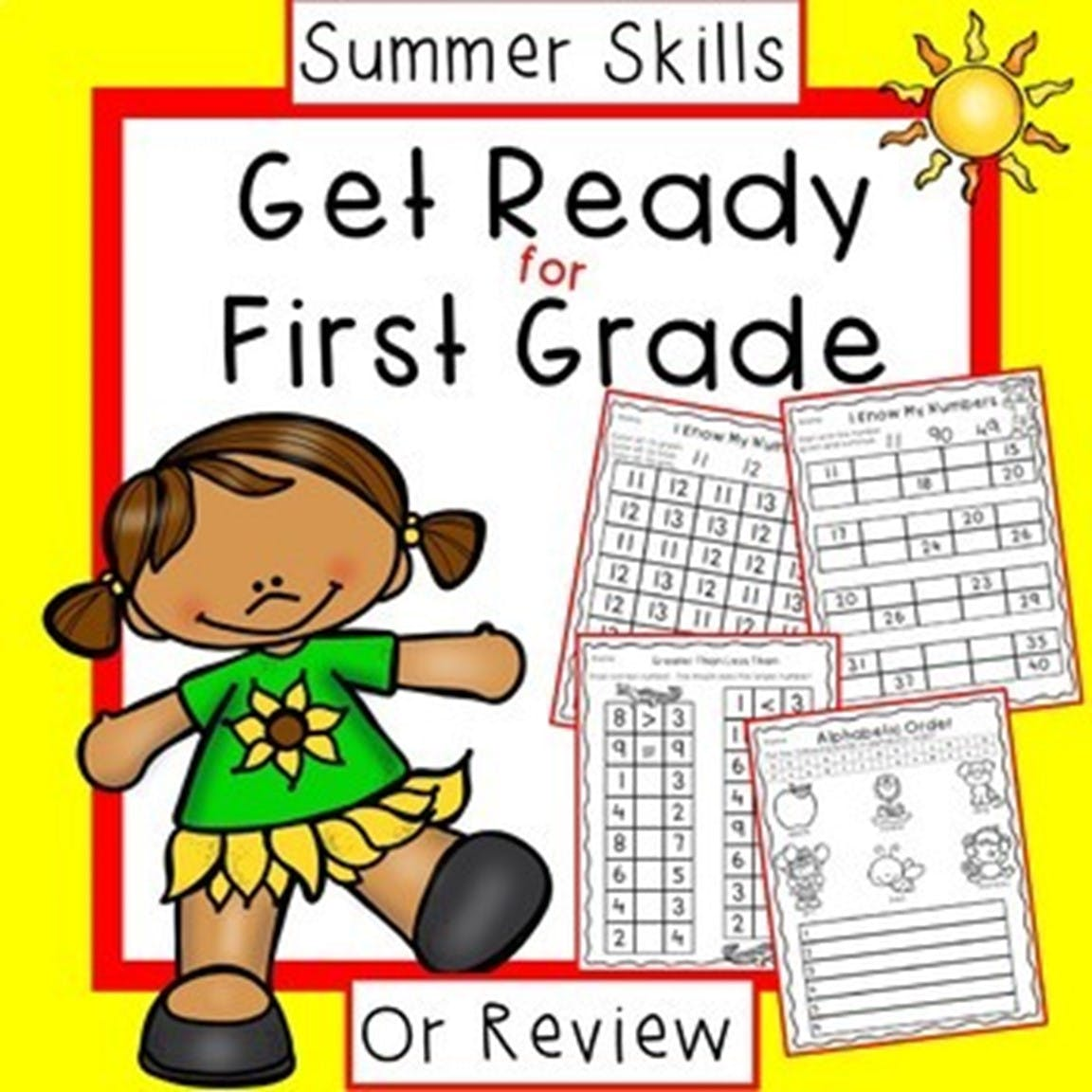
πŸ‘‰Get Ready for Kindergarten-Summer Skills


10 things your child needs to know before kindergarten:

1.  Be independent. The more your child can do for themselves, the better.  Let them dress themselves, put on their own shoes, brush their own teeth and go to the restroom independently. If they can help prepare their breakfast such as pop tart or cereal, that's great! Being independent at home will help build confidence at school. 

2.  Keep routines at home.  They will be on a tight routine at school. This will help them transition.  Children on a routine at home will be able to deal with a routine at school.

3.  Read! Read to your children, with your children, and let them read (or pretend) to read alone. They do NOT need to know how to read. Have books available for them. If you don't have many books, check out your local library. You can bring home books weekly and switch them out.  Also, local thrift stores have inexpensive books to help build your library. 

4.  Practice literacy and math skills! Engage children in songs such as the simple alphabet songs.  Start recognizing letters while out on errands, grocery stores, or road trips. Look for a, b, then c, etc.  Count to 10, then 20! Count beans, macaroni, toys, etc.  Also, count cars, people or signs when driving around. Click on the picture below for more practice in this summer readiness packet.


5.  Recognize basic shapes. Know circle, square, triangle, and rectangle. Find these shapes around the house or on errands.  Use those school supplies to draw and cut these shapes for a fun art activity.

6.  Learn how to tie shoes independently or buy Velcro shoes.  You want to run at recess but there are 5 children in front of you getting their shoes tied by the teacher.  

7. Write their name. Give your child fun markers, crayons, or color pencils to make writing their name a fun activity.  You may also want to use chalk or even water and a paintbrush on a sidewalk.

8.  Buy school supplies early! Go ahead and get the school supplies early or even the year before.  Let them color, cut, glue, and use pencils. When they get to kindergarten, they will be ready to go!

9.  Be able to separate from parents.  Be sure to go places without your child on occasion, leaving them with a family member or sitter.  Separation anxiety can be an issue when beginning kindergarten.  Practicing this activity will help build confidence before the first day of school. 

10.  Use zippers for coats, pants, or hoodies.  Make sure your child can zip up their coat, pants, or hoodies. This makes it easier for them when going outside for recess or using the bathroom.

Ok, 1 more....Use the bathroom independently. πŸ˜…

Click on the following pictures for more information or assistance helping your child 

Get Ready for Kindergarten.


Click on this picture to watch a YouTube Video of this product.


Thank you so much for stopping by! For more resources, please visit my store at


Teach b and d Reversals to your child or student

Recently, I taught a two week summer school the first two weeks of June. We had 4 groups of 6 that rotated between 4 teachers. The stations were phonics, comprehension, technology and guided reading at the students' levels. As I was working with a group of students at E/F level, I noticed that a couple of first grade students were confusing b and d. I made note on a post-it to pull these two and do some work on b/d. The whistle blew and a new group of students came to my group to read. This group was reading at g/h level. As I went around to each student, again I had students that were reading at this level confusing b/d. The third group came in reading at i/j level, and you guessed it! Even at that level, there were some students confusing b/d/q/p!!

We recently did a professional development with a book called, "Shifting the Balance," by Jan Miller Burkins and Kari Yates. I highly recommend this book! We learned the reason students confuse these letters. For example, if you have a chair you can tell a student it is a chair. If you turn it backwards, it is still a chair. If you turn it upside down, yep a chair. Backwards and upside down, the chair stays a chair. This is a concrete idea. Young students need concrete examples. So, when you tell them that a letter in a different position is a different letter, that is confusing for them.

I have never seen as many students struggle with this as I have this last year. I am not sure if it is because of a pandemic and students were not exposed to letters, words, and books as much as they have been in years past, but I suspect it played an important role in this scenario.

My plan this year is to take a little more time going through these letters with all my readers, high and low. I may even demonstrated the chair example for them. When I searched for resources, I struggled to find what I needed. Here is what I know...

1. Teach them to look at an alphabet. Say the alphabet. When rote quoting the abc's, they will come to the b first and compare it to their reading or writing. Then they will reach the d, and do the same.

2. Hold up 2 OK hand signs, close one eye and match it to the letters on the alphabet chart. Some people use closed fingers, with thumbs out to compare.

3. Have them say and write the letters b/d, copied from the alphabet chart to see it alone before starting to write in words or sentences.

4. I am working on a product this week that will give more practice in small groups. I will be posting soon, so watch for it on the home page of TPT if you are interested in small group work. I have already used it in summer school for my sweet littles that struggled. I plan to make a freebie to go along with this product. :)

Good luck with your b/d/p/q teaching this year! Let me know how it goes in my question and answer section. You may have ideas I haven't thought of. I need all the help I can get! We're all in this together.

Sincerely, Robin :)


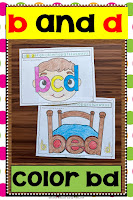
Just by coloring these worksheets, your child will be exposed to the letters b and d and the way they are formed.


When you write the word bed, you can compare to the alphabet to see the way the b is written or the d is written.


More coloring b and d for exposure.


Show the hand strategy. When you start with the alphabet you 'see' the b or d in your hand.


You may want to show the face method, baseball and bat, or drum.  Remember to pick one or two to work with.  You don't want to throw all of these at once to your child or student.


These hand strategies are very common in the classroom setting.


Practice b and d with pictures of objects that start with these letters.


Once you have practiced with one of the above strategies, play games.  Color the bs and color the ds.


b and d Bingo!! If you are homeschool or school setting, you may use anything to cover up the answers when called. Some ideas are pennies, small blocks, bears, cut out construction paper squares.


Play Bingo with words that start with b and d, if your child is at this stage. Seeing the letters in words and being able to differentiate them is an important skill in reading.


In this activity, you are looking only for words that start with b, and words that start with d, and coloring them.


You will be cutting out words and sorting them in b or d. Glue onto the the provided printable.


Color the b bubbles, color the d bubbles.


Practice writing b, practice writing d.


Sort pictures of words that start with b and d, perfect kindergarten or first grade students.


Here are a few colored examples of the pages above.


If you want to know more about this product, please visit the link.

I have FREE Practice pages if you are interested.


National Rainbow Day April 3rd!

Hey, are you a teacher or mama/grandma that wants to enrich a little one or your students?  Well, let me tell you! National Rainbow Day is the perfect day to do all things rainbowy! Is that even a word??  

Actually any national holiday is a great way to bring something fun into your learning day!  I go back to school next week into my first grade classroom and am planning on kicking off our week with all things rainbow! I am really excited!

First we will make hats to wear throughout the day! You do not need a special template.  Just get some white paper, draw a rainbow and staple bands to the side and fit around to their head.  However, if you want a template, I have one here! Click on the picture!


Next, we plan to read books from the public library about rainbows! I will go pick out some books to take to our reading center in our classroom.  Also, there are many great choices for rainbow books you can search! I can't decided which ones to get.  I think I'll get them all up to my 30 count limit!


I love to teach phonics with a poem of the week and I wrote this little ditty... haha! I always tell my students I am a song writer, but really they are off the cuff and sometimes don't even rhyme! But with this one, I think I will teach them how to find the sounds in the middle of the words.   For example, I spy a word that has /e/ as the middle sound.  That's right! RED! Color the e in red, and so on. 

This one goes to the tune of Head and Shoulders, Knees and Toes. 


For our read aloud, I will read one of the books from the library and follow up with this mini book.  They will get a copy of the black and white copy to color.  They can then put this reader in their book tub to add to their quiet reading collection.


We will make this cute craft during arts and craft special! You can totally make this with cutting white strips to color the colors of the rainbow and put on a circular cut-out with cotton balls, but if you want the ease of a template, click on the picture below.


We will write about what we wish to find at the end of our magic rainbow.  Do you want to find candy? Do you want to find money?  Do you want to find toys? What do you want to find at the end of your rainbow? 


We will practice our spelling words in one of our language arts stations.


During math centers, we will have a scavenger hunt as one of our stations!


Another one of our stations will be a sight word station.  You can totally do this by writing your sight words or even spelling words on 3x5 cards.  Draw a rainbow and call out the words to place under their rainbow.  I will have 4-5 students in a group.  I will lay about 20 words on the table.  Each of them will have their own rainbow.  I call the one at a time to take turns.  Ella, find the word "them."  Ella will find the word and put it under their rainbow. This is not a game where anyone wins, but they love finding the word I call out.


In math, students will color the row according to what you say, "Color 21-30 orange!" If you have students that have little number sense start at 1 and only go to 20, or 30, depending on their level. Higher students can be given random places to start to practice their number sense. 


Morning work will be easy with these simple addition and/or subtraction worksheets.  Obviously, there is so much more than you will ever need in this packet, but I wanted to make sure there were plenty of choices for buyers to choose from for the perfect rainbow day!


This is one of my favorites! Place a cloud on the rainbow and have students identify tens and ones.  They can either just place the number or use place value blocks.  


If you have stayed with me through this entire blog, I have a fun freebie to go with your rainbow day! Most of your activities can be created with simple paper. but if you want the ease of templates, I would love to help you out.  However, click on the following picture for a freebie that is a small sample of the larger paid product. 


Thank you sooo much for hanging out with me and learning about how you can bring rainbow things into your learning or enrichment day! For more information, other products, freebies, and sales, please follow me on my Teachers Pay Teachers Store here! 


There was an Old Lady Who Swallowed BUNDLE Reading Comprehension Questions and Reading Strategies

Have you ever found yourself at a loss when trying to get your students engaged with reading comprehension questions? Or frustrated with th...