Are you ready to start working with students in small groups to help them read better? Here is a checklist of what I do in guided reading! I usually keep a book for a group for a week. I go through each day as listed below. If I have a slower reading group, it may take four days to complete all the activities. However, if I have students with a higher reading abilities, we may get through a book in 2 days.
Pin this picture for later recovery!
Day 1
1. Welcome the students with small talk, about 30 seconds or less!
"Hi guys! How are you doing today? I am so excited to show you the book I have!
2. Connection: Show the book cover and give a reason you brought this book to the table. Introduce the title and author. This should take 1-2 minutes.
"I have the book titled, The Dot! This book was written by Peter Reynolds! I got this book out today because I had trouble coming up with something to paint over the weekend in my art studio.
3. Move to Schema: Have you ever had trouble thinking of something to draw? How did you finally decide what to do? What did you draw? Do you like to draw? Maybe I will try that!
4. Vocabulary and Decoding: When you read this book, you will find these words in the book! You may know some of them. There may be some words that are new to you. Let's go over these words. (Beforehand, go through the book and pick out about 6 words that you think your students may not understand or be able to decode. Put these on 3x5 cards and put the book and cards in a gallon size bag for future use. You will use them for years, so these cards are worth saving and keeping with this book.) 2 minutes
Flashcard the words for readability and discuss each one. This can take 5-8 minutes.
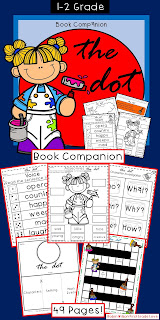
**Cards are already made and included in my book companions. The Dot can be found at the bottom of this post.**
MY FAVORITE!!
5. Play a game with the cards for about 5 minutes. There are many games I have come up with and here is a list!
a. Around the World: Start at the first two students on the end and the first one to read the word and/or say the meaning goes to the next student.
b. Whack a card. Just like Whack a Mole. Lay cards on the table, call the word and students can whack it with their hand. Teach them how to whack softly or they will hurt their hand.
c. Give each student a card. Call out the word and they have to jump up and/or say the meaning.
d. I Spy: I spy the word, ______. They all scramble to find the word in the book. You can narrow it down to page number. I spy the word __________ on page 8.
Depending on skill level, time may be out for younger students. But you have introduced the book, the vocabulary and any unknown words, and played a game with the words. You may have to stop after step 5 and play the game on day 2.
Day 2:
1. Play the vocabulary game again! What? Yep, play! Play for about 5 minutes. It will reinforce those words and prepare them for the reading. It will also get them excited about guided reading.
2. Remind students the title of the book, and where you left off from the day before.
3. Pass out the books. Ask students to read the book completely independently. If the book is at their level, they should be able to read it mostly independently except for a handful of words.
4. Post the cards on a small easel close by where they can refer to them. You can do this when they get started reading. They will look up and be so happy when they find the words in the book while reading. "I know that one, Mrs. Wilson! It is _______. It means ____________.
5. Students will read the book for the next 10 minutes or as long as time allows. Early finishers can re-read or work going back through the cards until everyone is finished.
6. While they are reading, you will be getting out our guided reading notebook to take running records. This will need to be procedural taught the first day of guided reading in small groups. The first time I sit down with students, we talk through what we will do in guided reading.
7. Running Records. In first grade, students will either need to read in low voices, or whisper read sometimes. I tap the first student and ask them to read aloud for me. As they read, I make checks for correct words, write the words they miss over what it should be. This post will not be about running records. I'm sorry! :( But maybe I can address how I do running records at a later date.
8. Listen to each student to get running records. I do not do running records for every book or every week. Sometimes, I go straight to comprehension strategies or skills instead in place of number 6 above.
So in short
Day 1
1. Welcome
2. Connection: Introduce the book and why you picked it.
3. Schema
4. Introduce Vocabulary and Decoding with flashcards
5. Game with Vocabulary
Day 2
1. Play vocabulary game
2. Quick reminder about the book
3. Pass them out
4. While students are reading, post vocabulary in a prominent place
5. Students read for remainder of time
6. Running records, strategy, or skill. If you are working on a strategy or skill, you can wait until students are finished reading and have a discussion with feedback from students or practice the skill.
Often this will go to a third or fourth day. Make sure to remind students each day where you left off the day before.
Do this guided reading plan with The Dot Book Companion.
Most teachers struggle with time to create activities they need for their daily curriculum. At First Grade Love, you will find resources that will engage your students in fun learning and you'll get the hours back in your day.
43 Classroom Jobs Your Students Can Do!
There are so many things to do in a classroom! I am going to utilize my students this year with some of the jobs. This makes them feel important and helps our room flow smoothly. I have been considering all the different jobs my students could do! These are the ones I have come up with so far!
I will only have 22 first grade students this year, so some of these can be doubled up. For example, the Paper Passers can also be Paper collectors, which is separated in this list. There may be jobs that you would rather do yourself unless you have the perfect student for that job! Last year, I had a cutie that could just about run the whole room! Of course she didn't, but she could have!
And of course, each of these will need to be taught with procedures, especially with my littles! Do you have other jobs I didn't think of? List them below.
Pin for later reference so you don't lose this list and can come back to it later! At the bottom of this post are several ready to print job tags for you to display in your classroom!
Each job has number of students needed for this task. You may adjust according to your needs.
Download this list FREE here -> Classroom Jobs List FREE
1. Door Greeter 1
2. Breakfast Manager 2-3
3. Lunch Order Manager 2
4. Folder Manager 2
5. Homework Manager 2
6. File Folder Clerk 2
7. Mail Manager 1
8. Curriculum Manager 2-3
9. Bathroom Monitor 2 Girls and Boys
10. Phone Receptionist 1
11. Stations Material Manager for Math 2
12. Stations Material Manager for Reading 2
13. Class Nurse 1
14. Librarian 3-4
15. Sanitizer Distributor 2
16. Lunch Coordinator 1
17. Lunch Room Coordinator 2-3
18. Rotation Station Monitor Math and Reading 2
19. Pencil Manager 2
20. Floor Manager 2
21. Materials Manager 3-4
22. Lost Materials Manager 2
23. Drinking Fountain Monitor 1-2
24. Desk Manager 3-4
25. Head Custodian for End of Day 2
26. Mailbox Manager 2
27. Computer Technician 2-3
28. Teacher's Secretary 1
29. Pledge of Allegiance Leader 1
30. Classroom Mantra Leader 1
31. Absentee Manager 2
32. Absentee Make-up Manager 2
33. Birthday Manager 2
34. Electrician 1
35. Calendar Manager 2
36. Music Maestro 1
37. Curriculum Collector 3-4
38. Recycling Manager 2
39. Table or Station Leader 4-5
Depending on how many tables or stations you have
40. Line Leader 1 Changes daily with Student of the Day
41. Weather Meteorologist 1
42. Recess Monitor 1
43. Substitute Job Manager 2
You can make your own cards for each of these jobs easily on colored card stock, or if you want to save time, you can click here for pre-made cards for these jobs!
I will only have 22 first grade students this year, so some of these can be doubled up. For example, the Paper Passers can also be Paper collectors, which is separated in this list. There may be jobs that you would rather do yourself unless you have the perfect student for that job! Last year, I had a cutie that could just about run the whole room! Of course she didn't, but she could have!
And of course, each of these will need to be taught with procedures, especially with my littles! Do you have other jobs I didn't think of? List them below.
Pin for later reference so you don't lose this list and can come back to it later! At the bottom of this post are several ready to print job tags for you to display in your classroom!
Download this list FREE here -> Classroom Jobs List FREE
1. Door Greeter 1
- Answers the door
- Greets the visitor appropriately
- Invites them to have a seat if they can
2. Breakfast Manager 2-3
- Comes down to the classroom early
- Sets out the breakfast for students to pick up as they enter
- Cleans up breakfast, fills out charts for cafeteria staff
- Returns leftovers to the cafeteria
3. Lunch Order Manager 2
- Makes sure each student has chosen lunch
- Organizes the name magnets in appropriate places
- Fills out lunch order
- Delivers order to the cafeteria
4. Folder Manager 2
- Collects all folders turned in
- Puts in number order
- Pulls out homework to give to homework manager
- Reminds students to turn in folders that forgot
5. Homework Manager 2
- Place Homework in appropriate bin
- See if there are any missing, write them down
- Turn in missing homework names to teacher
- Places make up pages in make up file folders
6. File Folder Clerk 2
- Places empty folders back in mailboxes
- 1 to place, then second student to check to make sure students get the correct folder
7. Mail Manager 1
- Picks up mail from teacher's box in office
- Picks up anything from office needed
8. Curriculum Manager 2-3
- Passes out Paper
- Passes out Materials for craft, activity, etc.
9. Bathroom Monitor 2 Girls and Boys
- Checks bathroom to make sure girls are not playing around
- Checks bathroom for messes made and reports to teacher
10. Phone Receptionist 1
- Answers the Phone and delivers message to teacher
- Get teacher if needed
11. Stations Material Manager for Math 2
- Makes sure materials are in place for stations
12. Stations Material Manager for Reading 2
- Makes sure materials are in place for reading stations
13. Class Nurse 1
- Assist students to the nurse, if needed
- Uses Hand Sanitizer first
- Gets bandaid and helps put it on
- Place Vaseline on Quetip for chapped lips
- Reports blood or other assistance needed for teacher or aid to handle if teacher is unaware
- Students should not deal with blood or any major ailment
- Gives pep talk and pats on back
14. Librarian 3-4
- Collects books read at home and changes them out for new or oversee
- Watches over classroom library and keep it straight and organized
15. Sanitizer Distributor 2
- Passes out hand sanitizer as needed and before lunch
16. Lunch Coordinator 1
- Calls out students in the correct line for lunch choices
- Double checks students are in the correct line
17. Lunch Room Coordinator 2-3
- Checks tables and floors for trash left behind and remind offenders to go back
- Washes down tables if allowed (Our school isn't allowing this, but would be a good job)
18. Rotation Station Monitor Math and Reading 2
- Move (Rotate) the Station Frames to the next station for the next day
19. Pencil Manager 2
- Sharpens broken pencils at the beginning and end of each day
- Place them in the sharpened box
20. Floor Manager 2
- Checks the floor at the beginning, middle, and end of day to make sure it is clean
- Remind students to pick up near their desks
21. Materials Manager 3-4
- Pass out glue, construction paper, or any other craft material as needed
22. Lost Materials Manager 2
- Helps students find lost materials needed during stations or seatwork
- Knows where and can get pencils, extra glue, crayons, and spare scissors needed for the activity
23. Drinking Fountain Monitor 1-2
- Stands by drinking fountain and says, 123 that's enough for me
- Reports any offenders playing around in line or at the fountain
24. Desk Manager 3-4
- Checks desks at the beginning, middle, and end of day for messes
- Passes out wipes or cleans desks with wipes at the end of the day
25. Head Custodian for End of Day 2
- Asks students to return to their seat, floor area, to put away anything out of order
- Checks overall look of the room and calls out needs
- If library needs tidying, he/she will call that department to clean it up, for example
- If the floor needs assistance, call on the floor department
26. Mailbox Manager 2
- Call back students that forgot their folder, homework
27. Computer Technician 2-3
- Can help log-in
- Can figure out technical difficulties (I know this sounds crazy, but my students can figure these things out much quicker than I can)
- Report problems to me that can not be resolved
28. Teacher's Secretary 1
- Students go through the secretary before coming to me with issues such as bathroom
- Procedures will be repeated
- Random stories of random nature can be filtered through a student secretary
- My favorite because I don't get interrupted as much!
29. Pledge of Allegiance Leader 1
- Stand in front of class near flag and lead by example
30. Classroom Mantra Leader 1
- Stand in front of class near mantra and lead by example
31. Absentee Manager 2
- Checks lunch board and writes down any absentees
- Turn list into teacher to record
32. Absentee Make-up Manager 2
- Collect make-up work for absent student and put in make-up folder
- Another favorite because I always forget this
33. Birthday Manager 2
- Figures out whose birthday is in the month and record on the calendar
- Make sure they get the birthday chair
- Lead the birthday song
- Help pass out cupcakes or other snack birthday student brought in
34. Electrician 1
- Always at the end of the line to turn out lights and shut door
- Turns out lights when a movie, or smartboard learning requires
35. Calendar Manager 2
- Changes the date on the calendar at the end of everyday or first thing in the morning
- Changes the number of the day each day
36. Music Maestro 1
- Chooses music during writing or other times required
- Controls the volume
37. Curriculum Collector 3-4
- Collects completed assignments
- Turns in assignments in appropriate trays
38. Recycling Manager 2
- Reminds class of recycled material that can go in the recycled bin
- Watches Recycle bin to make sure it has appropriate materials in it
- Puts it out in the hall on the appropriate day for school pick-up
39. Table or Station Leader 4-5
Depending on how many tables or stations you have
- Make sure everyone in their station or group has everything they need
- Make sure students stay on task
- Report any problems
40. Line Leader 1 Changes daily with Student of the Day
- Leads the class to special of the day: Art, Music, PE, Library
- Leads by example
41. Weather Meteorologist 1
- Checks temperature daily and places on the weather chart
- Inform students of indoor or outdoor recess
42. Recess Monitor 1
- Scans playground for any balls still out and carries them in
43. Substitute Job Manager 2
- Fills in for the absent student and their job
- Helps the Substitute teacher find her way in the room
You can make your own cards for each of these jobs easily on colored card stock, or if you want to save time, you can click here for pre-made cards for these jobs!
4 Checklists to get Ready for Back to School for Teacher
Are you a new teacher? An experienced teacher? Either way, teachers are turning their thoughts to getting their classrooms ready. I have already started dreaming about that first week! No really, I am having dreams at night about the first week of school! Lol!
Here are 4 checklists you can do to get your first week ready!
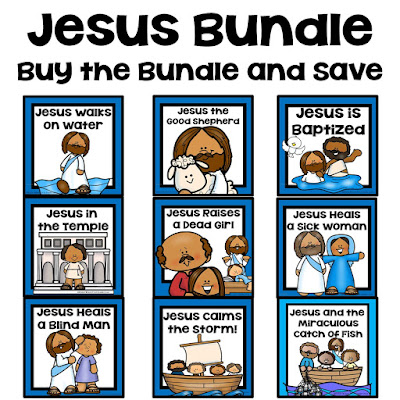
9 Lessons to Learn about Jesus
9 Lessons to Teach Jesus to your Sunday School, Private School, or Home School! Reading including comprehension strategies, vocabulary, games, coloring, and more! Buy the Bundle and Save!
Do You Need a Fun Game for Your Students? Here is the Worm Game!
I have a fun game that I introduce to my students year after year that goes with any concept I teach! It really works with any concept! My students have named this the "Worm Game" because they said it makes them think of the "Worm Game." Well, I had to look it up and there is a game that has worms and it goes and goes...and yea... so we call it the Worm Game! You can name it anything you want! I would like to know what you choose!
So here goes! I'll teach you one way you can play and then you can see how it will work with other 3x5 cards!
1. Put addition problems on 3 x 5 cards, or use flashcards you already own.
2. Place the cards on the table in a rectangle shape.
3. Find some dice and place markers for each student. I've used plastic bugs from the dollar store, assorted candies (not chocolate), cubes, or bears from your math manipulatives!
4. The first student rolls dice and moves forward that number of spaces. He/she must answer the question. If they get it right, they get to stay on that space. If they get it wrong, they must return to where they were, not necessarily at the beginning.
5. The second student rolls the dice and moves forward answering the question and follows the same rule.
6. Continue until someone reaches the end and becomes a winner!
Now you know how to play, you can put any concept on these cards!
Math: You can make cards with subtraction, double digit addition or subtraction, give a two digit number and ask students to determine tens and ones, number bonds, and more!
Language Arts: Put nouns on cards and ask students to identify person, place, or thing, verbs and ask them to act it out, contractions and identify the two words that make it up, read sight words, say sentence with the sight word, turn the spelling word over and spell it from memory, and more! You probably can think of many more!
Seriously, any concept that can be put on a 3 x 5 will work! Make it a station!
Do you already have flashcards, game cards, task cards, or scoot cards that go with other games? You can use them and just start! Here is a video!
You can make your own or use cards found in these resources!
Winter Addition and Subtraction Bundled
Snowflake Sight Words
Verb Task Cards
Adjectives Task Cards
ABC Order Task Cards
Number Patterns Task Cards
Noun Task Cards
Following Directions Winter Task Cards
What cards will you use? Let me know below!
So here goes! I'll teach you one way you can play and then you can see how it will work with other 3x5 cards!
1. Put addition problems on 3 x 5 cards, or use flashcards you already own.
3. Find some dice and place markers for each student. I've used plastic bugs from the dollar store, assorted candies (not chocolate), cubes, or bears from your math manipulatives!
4. The first student rolls dice and moves forward that number of spaces. He/she must answer the question. If they get it right, they get to stay on that space. If they get it wrong, they must return to where they were, not necessarily at the beginning.
5. The second student rolls the dice and moves forward answering the question and follows the same rule.
6. Continue until someone reaches the end and becomes a winner!
Now you know how to play, you can put any concept on these cards!
Math: You can make cards with subtraction, double digit addition or subtraction, give a two digit number and ask students to determine tens and ones, number bonds, and more!
Language Arts: Put nouns on cards and ask students to identify person, place, or thing, verbs and ask them to act it out, contractions and identify the two words that make it up, read sight words, say sentence with the sight word, turn the spelling word over and spell it from memory, and more! You probably can think of many more!
Seriously, any concept that can be put on a 3 x 5 will work! Make it a station!
Do you already have flashcards, game cards, task cards, or scoot cards that go with other games? You can use them and just start! Here is a video!
You can make your own or use cards found in these resources!
Winter Addition and Subtraction Bundled
Snowflake Sight Words
Verb Task Cards
Adjectives Task Cards
ABC Order Task Cards
Number Patterns Task Cards
Noun Task Cards
Following Directions Winter Task Cards
What cards will you use? Let me know below!
5 Things to Get Ready for the First Week of School!
It's that time of year where my mind turns to my classroom. Well, that's not actually true! I think about my classroom all summer! But it is this time that I start getting the butterflies and having dreams, more like nightmares, getting ready to return to the classroom!
I had a nightmare last week that it was the first day of school and I had no plans! NO PLANS! AGHHHH!!! I didn't know what I would teach, what to say, what to do! The struggle is real! And I have been teaching for 10 years!!! In real life, I don't only plan, but I overplan! I don't ever get all the things done that I plan for each day!
So, I thought about making a list of things to do to get ready for that first day...er... first week!
1. Think about furniture placement. Look at your furniture arrangement and make sure it has good flow around the room. If you have students with special needs coming, make sure they have their space ready.
a. Students in wheelchairs need to be able to navigate all parts of the room
b. Students with special circumstances may need an end place with special seating.
c. Consider placing desks in a way that all can see the smart board or main teaching area.
d. Don't forget YOU need enough room to walk through and be able to work with students.
e. Think about stations or centers and where they will be placed.
2. Organize the things in your room. Rather than think about the whole, break it into parts! Have a place in mind for each area and even label. Labeling helps me because I forget my system when I am busy and just toss things in a cabinet on the fly!
a. Think about where your supplies can go that students bring in. Those pencils, crayons, erasers, scissors, paper, binders, notebooks, tissues, paper towels, etc. It adds up and will be crazy until you find a place for everything! Have a place in mind before they come!
b. Think about where you will store math manipulatives.
c. Where will you keep you teacher books, math games, reading games, recess toys?
3. Brush up on your procedures! If you've taught for years, you may be able to slip right back into this one. I have to remind myself that kiddos don't just get in line if you ask them! My favorite book for classroom procedures is Harry K. Wong: The First Days of School (not an affiliate, just a fan!) I teach procedures for every. single. thing. we. do! Haha!
a. Walking in the room, putting away backpack
b. Storing supplies in desks
c. How to line up in our room
d. How to line up outside
e. How to play outside (We walk around our playground in a long ling and talk about each area, playground equipment, where we can play, where we can't play, and consequences.)
f. How to walk in the hall
g. How to go through the lunch line
h. How to write your name on your paper
i. Bathroom procedures (taking turns, washing hands, put hand drying paper in the trash)
j. How to pack up, line up
k. Car rider, bus rider, bike rider, and walker procedure
4. Plan, plan, plan that first week! Plan a time to meet with your teaching partner to make a plan!
Have games, breaks, games, breaks to get you through that first week! I plan Language Arts game if it is my LA time and Math games or Stem if it is Math Block time! Here is a little run down of the first few mornings. Your morning may look different depending on your grade. Remember procedures continue through each of these!
a. When the students come in, I plan to have a fun morning work sheet
b. Read a book on the rug
c. Around mid-morning, we go outside that first week to learn playground procedures, then we get to practice those! Yes, we let them play, watching for and re-teaching procedures to the littles that forget. This is a great time for both student and teacher to unwind for a bit from all the nerves built up!
d. Back in the room, play a game
e. Lunch
f. Specials
g. Math is in my afternoon, so I will plan a math stem project.
h. Get ready for home
5. Have your curriculum ready! You don't want to be scrounging around to find things for your students to do. Get them organized and ready to grab in a hurry! Get extra of read-alouds, fun sheets, quick assessment printables, first week of math, and reading ready to go!
a. Back to School Read-alouds: Your personal books, school library books, public library books!
b. Quick fun sheets for morning work or in-between work, beginning of the year assessments.
c. Bring home the first week of math and reading from your adopted curriculum. I don't follow these word for word, page for page, but it gives me a starting point for my plans.
d. Look ahead and get your curriculum plans sketched out for the next 6-9 weeks. I like to look at my curriculum guide our school has implemented and pair it up with our adopted curriculum for topics needed to be covered. Pencil these in!
Most of all just be yourself! You can't be someone else, they are already taken!
I teach first grade and have some fun and educational printables that I will have ready. I will use some of these for morning work, and assessments. Some may seem a bit easy, but it gives them confidence especially that first day. Color by number? Oh, I can do that!
Back to School First Grade
I had a nightmare last week that it was the first day of school and I had no plans! NO PLANS! AGHHHH!!! I didn't know what I would teach, what to say, what to do! The struggle is real! And I have been teaching for 10 years!!! In real life, I don't only plan, but I overplan! I don't ever get all the things done that I plan for each day!
So, I thought about making a list of things to do to get ready for that first day...er... first week!
1. Think about furniture placement. Look at your furniture arrangement and make sure it has good flow around the room. If you have students with special needs coming, make sure they have their space ready.
a. Students in wheelchairs need to be able to navigate all parts of the room
b. Students with special circumstances may need an end place with special seating.
c. Consider placing desks in a way that all can see the smart board or main teaching area.
d. Don't forget YOU need enough room to walk through and be able to work with students.
e. Think about stations or centers and where they will be placed.
2. Organize the things in your room. Rather than think about the whole, break it into parts! Have a place in mind for each area and even label. Labeling helps me because I forget my system when I am busy and just toss things in a cabinet on the fly!
a. Think about where your supplies can go that students bring in. Those pencils, crayons, erasers, scissors, paper, binders, notebooks, tissues, paper towels, etc. It adds up and will be crazy until you find a place for everything! Have a place in mind before they come!
b. Think about where you will store math manipulatives.
c. Where will you keep you teacher books, math games, reading games, recess toys?
a. Walking in the room, putting away backpack
b. Storing supplies in desks
c. How to line up in our room
d. How to line up outside
e. How to play outside (We walk around our playground in a long ling and talk about each area, playground equipment, where we can play, where we can't play, and consequences.)
f. How to walk in the hall
g. How to go through the lunch line
h. How to write your name on your paper
i. Bathroom procedures (taking turns, washing hands, put hand drying paper in the trash)
j. How to pack up, line up
k. Car rider, bus rider, bike rider, and walker procedure
4. Plan, plan, plan that first week! Plan a time to meet with your teaching partner to make a plan!
Have games, breaks, games, breaks to get you through that first week! I plan Language Arts game if it is my LA time and Math games or Stem if it is Math Block time! Here is a little run down of the first few mornings. Your morning may look different depending on your grade. Remember procedures continue through each of these!
a. When the students come in, I plan to have a fun morning work sheet
b. Read a book on the rug
c. Around mid-morning, we go outside that first week to learn playground procedures, then we get to practice those! Yes, we let them play, watching for and re-teaching procedures to the littles that forget. This is a great time for both student and teacher to unwind for a bit from all the nerves built up!
d. Back in the room, play a game
e. Lunch
f. Specials
g. Math is in my afternoon, so I will plan a math stem project.
h. Get ready for home
5. Have your curriculum ready! You don't want to be scrounging around to find things for your students to do. Get them organized and ready to grab in a hurry! Get extra of read-alouds, fun sheets, quick assessment printables, first week of math, and reading ready to go!
a. Back to School Read-alouds: Your personal books, school library books, public library books!
b. Quick fun sheets for morning work or in-between work, beginning of the year assessments.
c. Bring home the first week of math and reading from your adopted curriculum. I don't follow these word for word, page for page, but it gives me a starting point for my plans.
d. Look ahead and get your curriculum plans sketched out for the next 6-9 weeks. I like to look at my curriculum guide our school has implemented and pair it up with our adopted curriculum for topics needed to be covered. Pencil these in!
Most of all just be yourself! You can't be someone else, they are already taken!
I teach first grade and have some fun and educational printables that I will have ready. I will use some of these for morning work, and assessments. Some may seem a bit easy, but it gives them confidence especially that first day. Color by number? Oh, I can do that!
Back to School First Grade
Subscribe to:
Posts (Atom)
There was an Old Lady Who Swallowed BUNDLE Reading Comprehension Questions and Reading Strategies
Have you ever found yourself at a loss when trying to get your students engaged with reading comprehension questions? Or frustrated with th...
-
Have you ever found yourself at a loss when trying to get your students engaged with reading comprehension questions? Or frustrated with th...
-
Compound Words for First Grade will help you teach students the concept that if you put two small words together, you can make a new word!...
-
You have come to the right place to receive a logical order to teach phonics for Kindergarten and First Grade. Subscribe to the blog to le...